How to choose a used tanker: food-grade, fuel, or gas tanker
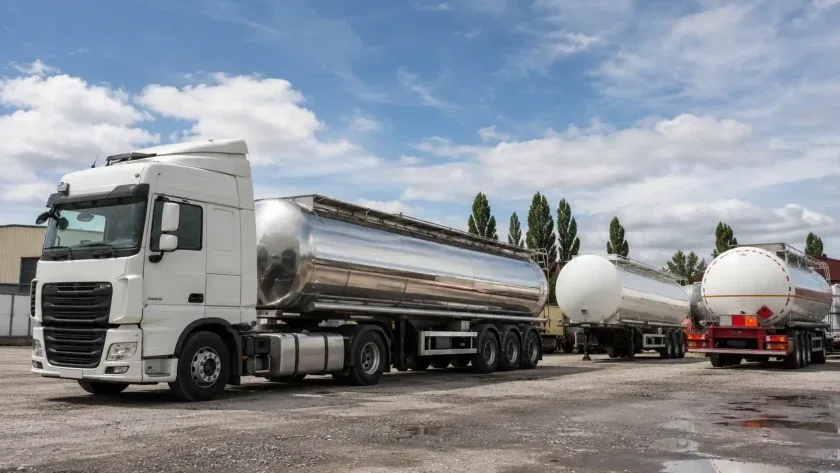
The first filter when choosing a tanker is the cargo. Water, milk, diesel, petrol, and gas require a different design, different fittings, and different documents. Before buying, you need to know what the tanker previously carried, how many compartments it has, the condition of the tank shell, whether the hatches, valves, taps, and pump equipment are functional, and whether the documents for that specific type of transport are in place.
In the tirkomis catalog, tankers can be found among semi-trailers via the body type "Tanker" and the classification "Gas tanker", "Fuel", or "Food-grade". If the right unit isn't among the current listings, it's worth leaving a request with a manager: cargo type, budget, required volume, number of compartments, VAT, and document requirements.
Where to start when choosing a tanker
Before browsing listings, you need to answer three questions:
- What cargo will be transported.
- What volume and number of compartments are needed.
- Which documents are mandatory for this cargo.
These three parameters immediately narrow down the options. A food-grade tanker is not suitable for fuel. A fuel tanker is not suitable for milk. A gas tanker cannot be assessed only by volume and price, because tolerances, fittings, valves, and inspection deadlines are of key importance.
| Cargo | Required tanker type | Critical inspection points |
|---|---|---|
| Water, milk, juices | Food-grade tanker | Inner surface, odor, washing, compartments, seals |
| Diesel, petrol, petroleum products | Fuel tanker | Tightness, compartments, drainage, pump, grounding, ADR/ADR-UA |
| Gas | Gas tanker | Shell, valves, fittings, marking, documents, inspection deadlines |
| Technical fluids | Depends on cargo | Shell material, previous use, cargo residue |
| Mixed tasks | Separate inspection needed | Cargo compatibility with construction and documents |
Food-grade tanker: the main risk is the inner condition of the shell
A food-grade tanker is bought for transporting liquids that come into contact with the inner surface of the shell: water, milk, juices, food mixes, or other liquid products. Here, not only the metal and year of manufacture matter, but also the usage history.
What to check inside
The first inspection is the inner surface. You need to check for corrosion, residue from previous cargo, odor, traces of chemicals, damage, cleanliness, and the condition of the compartments and partitions. If there is a sharp odor inside or traces of non-food liquids, such a tanker may not be suitable for food transport.
Separately, check the hatches, necks, lids, seals, drain taps, pipelines, and the possibility of proper washing. In food-grade work, a minor issue with a seal or a residual odor can ruin a load.
Which documents matter
The buyer must check which cargoes the tanker was used for previously. For food liquids, it's important that the materials in contact with the product are compliant, that the sanitary condition is good, and that there's no history of transporting technical or chemical liquids.
For imported units, it's worth verifying the tanker's previous purpose and the materials in contact with food products. Basic requirements for such materials are described in the European Commission section on food contact materials.
If the tanker is imported, it's worth clarifying its previous purpose, country of origin, documents, and the possibility of using it for food cargo in Ukraine. Without this, there's a risk of buying a unit that formally looks food-grade but in fact doesn't suit the required job.
Fuel tanker: the main risk is documents and tightness
A fuel tanker works with diesel, petrol, or other petroleum products. Here, the compartments, tightness, drainage system, pump equipment, marking, grounding, and documents for transporting dangerous goods are important.
Compartments and drainage system
A fuel tanker often has several compartments. Before buying, check the number of compartments, the condition of the partitions, hatches, lids, drain taps, pipelines, hoses, fittings, and pump equipment.
Weak points are the joints, drain fittings, pipeline mounting points, seals, and taps. Leaks in these areas mean extra costs and the risk of a load being refused.
ADR/ADR-UA
Fuel is classified as a dangerous good. Before buying, check the documents, marking, plates, special equipment, the certificate of approval for the vehicle to transport specified dangerous goods, and its validity period.
For transporting fuel, you need to check the documents, marking, and compliance with ADR/ADR-UA requirements. The full text of ADR 2025 is published on the UNECE website.
If you're planning to work with fuel, it's worth separately reviewing the article ADR truck: documents, equipment and prices on the secondary market. For a fuel tanker, not just the tank itself matters, but the whole rig: the truck, the semi-trailer, equipment, and documents.
Gas tanker: the main risk is approval and technical deadlines
A gas tanker requires the strictest inspection among tankers. Such equipment works with a dangerous cargo under pressure, so the condition of the shell, fittings, valves, and documents is of decisive importance.
What to check on the unit
On a gas tanker, check the shell, fittings, shut-off valves, pressure gauges, pipelines, marking, protective elements, signs of impact, corrosion, repair interventions, and welds. If there are signs of makeshift repairs, a separate technical inspection is needed.
You also need to find out which gas the tanker was designed for. A gas tanker shouldn't be bought based only on price, year, or volume. What matters most is compliance with the specific cargo, the condition of the equipment, and the documents.
What to check in the documents
For a gas tanker, check the registration documents, the certificate of approval for transporting dangerous goods, inspection deadlines, marking, plates, technical documentation, and whether the actual tanker matches the documents.
In Ukraine, a vehicle's compliance for transporting dangerous goods is confirmed by the certificate of approval of vehicles for the transport of dangerous goods, issued or renewed by MIA service centers.
If the documents don't match the unit or the validity of the approvals has expired, you need to factor in the costs and time to restore documentary compliance. For a gas tanker, this can be more expensive and take longer than a regular chassis repair.
Prices on the secondary market
Among the current offers in the tirkomis catalog, food-grade tankers are the most numerous — 5 listings. Fuel tankers and gas tankers have 3 offers each. In terms of price, the lower entry point starts at around $9,500 for older food-grade tankers, fuel units start at around $14,000–15,500, and gas tankers from $17,000.
| Budget | Food-grade tanker | Fuel tanker | Gas tanker |
|---|---|---|---|
| Up to $15,000 | BURG 1985 — $9,500–15,000 | SCHWINGENSCHLOEGEL 2001 — $14,000–18,000 | No current gas tanker examples in this budget |
| $15,000–20,000 | MENCI 1999 — $16,500 | ELZAM 1996 — $15,500; Slisko 2007 — $18,000–22,000 | BC Hutnik 2010 — $17,000–20,000 |
| $20,000–30,000 | Look for fresher or better-preserved food-grade tankers | Slisko 2007 at the upper end of the budget; DROMECH 2003 — around $23,000; OMSP Macola 1996 — from $25,900 | Depends on compartments, condition, and equipment |
| $30,000+ | Rarer in this budget | OMSP Macola 1996 — up to $37,000 | — |
Food-grade tankers currently offer the widest choice by budget. Fuel units are worth calculating together with checking compartments, drainage, tightness, and ADR/ADR-UA. Gas tankers are harder to price without technical documents: the price is affected not only by year and tare weight, but also by the shell, fittings, valves, marking, and inspection deadlines. Before a deposit, a tirkomis manager will confirm availability, sale status, documents, and the final price of the specific tanker.
It's also worth remembering that a fuel tanker or gas tanker additionally requires an ADR truck.
Frequently asked questions
What types of tankers are there?
On the secondary market, three types of tankers are most commonly sought: food-grade, fuel, and gas tankers. Food-grade ones are used for water, milk, juices, and other liquid products. Fuel ones — for diesel, petrol, and petroleum products. Gas tankers — for transporting gas and other dangerous goods under pressure.
What should be checked on a food-grade tanker?
On a food-grade tanker, the first thing to check is the inner condition of the shell: odor, residue from previous cargo, corrosion, traces of chemicals, damage, and the condition of the compartments and partitions. It's also important to inspect the hatches, necks, lids, seals, drain taps, pipelines, and the possibility of proper washing.
What should be checked on a gas tanker?
On a gas tanker, you need to check the shell, shut-off fittings, valves, pressure gauges, pipelines, marking, protective elements, documents, and technical inspection deadlines. You should also separately find out which gas the tanker was designed for and whether the actual unit matches the documents.
What should be checked on a fuel tanker?
On a fuel tanker, check the number of compartments, tightness, condition of partitions, hatches, drain taps, pipelines, hoses, fittings, and pump equipment. Marking, grounding, ADR/ADR-UA, and the certificate of approval for transporting dangerous goods are also important.
What are the prices for tankers on the secondary market?
Based on tirkomis examples, food-grade tankers start at around $9,500, fuel tankers from $14,000–15,500, and gas tankers from $17,000. More expensive options can cost $25,000–37,000 depending on the tanker type, year, tare weight, axles, documents, shell condition, and equipment.
What should be given to the manager to select a tanker?
In the request, it's worth specifying the cargo type, the required tanker type, budget, desired volume, number of compartments, axle requirements, VAT, ADR/ADR-UA, and whether a truck is needed for the tanker. This way the manager can select equipment faster for the specific job, rather than just something similar in price.
Related articles

Semi-trailer bag: what to do with it after purchase
How to use or convert a semi-trailer bag. Inspection, documents and prices. TIRkomis - free parking and advertising for sale.

How to choose a container chassis: 20, 40, 45
How to choose a container chassis for 20, 40, and 45-foot containers? We'll break down frame types, container locks, axle loads, compatibility with the tractor unit, and how to inspect a used chassis before buying.

Truck unit diagnostics before purchase: which faults are critical
We explain how to read a ttruckunit computer diagnostic report, which engine, transmission, EBS, AdBlue and DPF faults are critical, and when a malfunction is grounds for justified negotiation.