Truck with a Crane (Manipulator): Pros and Cons of the Equipment
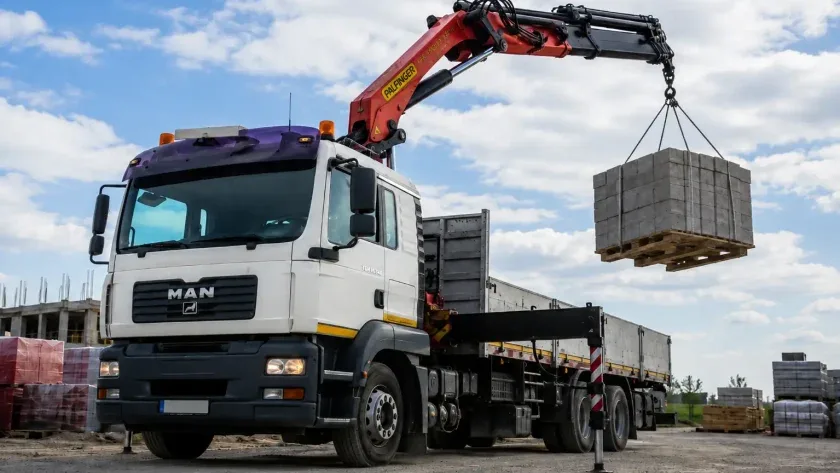
A truck with a crane (manipulator) is supposed to save time on loading and unloading every single day. If the vehicle regularly hauls pallets of building materials, rolled metal, timber, big bags, or equipment to different sites, the crane can justify a higher purchase price.
This format doesn't suit every business. A crane adds weight, reduces payload, complicates maintenance, and creates separate risk areas around the hydraulics, outriggers, boom, subframe, and paperwork. So the vehicle should be evaluated against real work: what it will carry, what weight it needs to lift, at what reach, on what kind of site, and with what margin left in the chassis.
In the truck catalog at tirkomis there are various options of this kind of equipment. The difference between them comes down to the body, actual lifting capacity at reach, chassis configuration, mileage, condition of the equipment, and the work scenario.
When a crane truck is genuinely worth it
The purchase makes sense if loading or unloading happens often, at different locations, and without reliable equipment already on site. This is a typical task for building-materials suppliers, scrap-metal yards, sawmills, farms, utility services, installation crews, and companies that deliver cargo directly to sites.
The main economics here come down to time. If a driver closes out several stops in a day without waiting for a forklift, the truck gets back to work faster. This is especially noticeable where heavy manual handling needs to be reduced: pallets, blocks, metal, timber, big bags, equipment.
A crane truck works best when three conditions line up: the cargo is heavy or bulky, there are many delivery points, and the sites don't have reliable unloading equipment on hand. If at least two of these conditions repeat weekly, this kind of truck can already be economically justified.
If cargo is usually taken off at warehouses with a loading ramp or a forklift, a crane can become an unnecessary extra cost. In that case it's more practical to look at a regular flatbed, curtain-sider, or medium-tonnage truck. For that kind of task, it's worth separately checking out the article A 10-Tonner for Work: Which Truck Is Best and Why.
An "oversized" crane isn't always a good deal either. A weak unit will work at its limit and cap what orders you can take. An overly powerful one adds excess weight, raises the purchase price, increases maintenance costs, and reduces payload. The choice starts with the cargo, the reach, the route, and the site conditions.
Pros and cons of a truck with a crane
A crane truck wins where site autonomy matters. The buyer needs to account separately for the chassis, the body, the crane, the outriggers, the hydraulics, the paperwork, and the payload.
Pros:
- one vehicle covers both delivery and unloading;
- fewer delays at sites without a forklift;
- faster handling of pallets, metal, timber, blocks, and equipment;
- less manual labor with heavy cargo;
- the ability to work at private sites, small lots, and places without a loading ramp;
- a crane in good condition raises the vehicle's resale value on the secondary market.
Cons:
- higher purchase price;
- less payload due to the weight of the crane;
- more expensive maintenance;
- more components to inspect: boom, outriggers, hydraulics, remote control, subframe;
- requires space to deploy the outriggers;
- correct paperwork becomes essential if the vehicle was converted/retrofitted.
The most common mistake is focusing on maximum lifting capacity. A "3 t" or "5 t" figure in the specs doesn't guarantee that weight at any distance. Close to the truck the crane handles one load, at a longer reach — a different one. The farther the cargo is from the vehicle, the more the working radius, ground conditions, and stability matter.
Before buying, it's worth confirming the lifting capacity specifically at the reach you need. If a pallet has to go over a fence, metal needs to land closer to a foundation, or equipment has to fit into a narrow yard, maximum capacity close to the truck is no longer the main number to look at.
Work scenarios for a crane truck
In Ukraine, a truck with a crane is most often bought for mixed work: building materials, pallets, timber, metal, big bags, equipment. The vehicle needs to be matched to the actual cargo, routes, and unloading points.
For building materials, lifting capacity at reach matters most. A pallet of blocks or dry mix often has to go over a fence, into a yard, or closer to the work area.
For rolled metal and timber, body length is critical. If you need to carry 6-meter metal stock or lumber, a short platform will limit the work even with a fully functional crane.
For private construction, maneuverability matters: narrow streets, limited access, little room for the outriggers, and an imperfect surface. In these conditions a more compact option that's easier to position on site can be more practical.
For agriculture and farming, versatility and chassis reserve are needed: big bags, equipment, pallets, farm supplies, smaller-scale gear. A weak base under heavy loads quickly causes problems with the frame, suspension, axles, and hydraulics.
Different tasks call for different configurations: lighter setups for local deliveries, mid-range for building materials and pallets, heavier units for bulky cargo, installation work, and longer reach. So it's worth looking at load class, reach, and work format.
| Work scenario | What's typically hauled | What's critical | What to confirm before buying |
|---|---|---|---|
| Building materials | Blocks, brick, tile, dry mix | Weight at reach, outriggers, sturdy body | How many kg it takes at 6–8 m |
| Metal and timber | 6-meter metal stock, lumber | Body length, flat platform, sideboards | Whether 6 m fits without risking the sideboards and tie-downs |
| Private construction | Pallets, concrete elements, materials | Maneuverability, outriggers, site access | Whether the truck fits in the yard and there's room for outriggers |
| Agriculture and farming | Big bags, equipment, pallets | Chassis, suspension, hydraulics, outriggers | Whether the truck has worked on soil and with what loads |
| Installation work | Equipment, structures, supports | Precision, remote control, play/backlash, stability | Whether the boom moves smoothly under load |
What to check before buying
A used crane truck has two sources of expense: the truck itself and the crane with its hydraulics. A problem in either of these areas quickly turns a good price into an expensive repair.
Start with the work profile: what the vehicle needs to lift, how often, at what distance from the truck, on what kind of sites, and with what body. For used equipment, a full inspection of the crane truck matters: chassis, corrosion, tires, brakes, suspension, frame, subframe, outriggers, boom play, hydraulics, hoses, service history, operating hours, and paperwork.
On the truck, the first things checked are the frame and subframe. The crane adds extra load, especially when working with heavy cargo at reach. On the frame, look for cracks, reinforcement, welding marks, fresh paint over problem spots, body misalignment, and metal fatigue near the mounting points.
Next, the crane is checked in operation: extend the boom, lift a load, check the reach, outriggers, remote control, slewing column, hydraulic cylinders, hoses, fittings, play, and smoothness of movement. It matters whether the mechanism works without jerking, misalignment, leaks, or sagging under load.
The body is inspected separately. For pallets, a flat platform and good access matter. For metal and timber — body length. For building materials — a sturdy deck, sideboards, tie-down points, storage for straps and tools, and support plates. The body, subframe, and crane need to work as a single structure.
Paperwork is another important area. If the crane was installed later, or the vehicle went through a conversion, this needs to be properly documented. You need to verify the VIN, registration certificate, owner, registration data, whether the construction matches the documents, and whether re-registration is possible. For a basic deal check, you can use the tirkomis checklist: Buying Commercial Trucks: Which Documents to Check. If the vehicle was officially converted, it's also worth checking the re-registration logic against the requirements for vehicle conversion.
| Component | What to check | What the problem risks |
|---|---|---|
| Frame and subframe | Cracks, reinforcement, welding, misalignment | Expensive repair and risk when handling cargo |
| Crane | Play, boom, slewing column, remote control | Imprecise operation and cargo limitations |
| Hydraulics | Cylinders, pump, hoses, fittings, leaks | Loss of power, downtime, repair |
| Outriggers | Smooth deployment, locking, condition of the pads | Instability during lifting |
| Body | Length, deck, sideboards, tie-downs | Cargo limitations |
| Paperwork | VIN, owner, conversion, registration certificate | Re-registration issues |
For a quick initial check of the truck itself, you can use the article How to Inspect a Used Truck in 30 Minutes, but the crane must always be tested in operation, ideally with a real load.
Prices for crane trucks
The price of a used crane truck is shaped by lifting capacity at reach, the brand and model of the crane, body length, gross weight, drive type, frame condition, mileage, hydraulics, outriggers, service history, and paperwork.
MAN ME 14.280 is the most affordable option in this lineup. A 2002 model, 930,000 km mileage, manual transmission, rear-wheel drive, 280 hp engine. Fitted with a Palfinger 105: boom reach 8 m, lifting capacity 3 t, 1,300 kg at full reach. Body — 6.2 × 2.5 × 1 m. This option makes sense for local deliveries, building materials, pallets, timber, private-sector work, and jobs that don't require maximum lifting capacity. Its advantage is an affordable entry price. The main areas to watch are age, mileage, frame and subframe condition, hydraulics, and crane play.
Mercedes-Benz ATEGO 2528 is a option for more regular deliveries. A 2002 model, 399,000 km mileage, manual transmission, 280 hp. The listing specifies a Hiab 122, boom reach 6.5 m, 1,850 kg at the end of reach. The 6.5 × 2.45 m body allows carrying 6-meter rolled metal and timber, as well as 10–12 pallets. Curb weight — 10.8 t, gross weight — 26 t. This is a strong example for metal, timber, pallets, building materials, and site deliveries. For this kind of scenario, body length can matter just as much as the crane's maximum lifting capacity.
DAF CF 85.480 is the most powerful option in this lineup. A 2002 model, 840,000 km mileage, automatic transmission, 6×2, 480 hp engine. Fitted with a Palfinger 165: lifting capacity 5 t, 1 t at 12 m reach. This option is worth considering if you need more reserve in engine power, chassis, and the ability to handle bulkier cargo. It's a vehicle for more intensive, regular work, where power, stability, sound outriggers, hydraulics, and frame all matter.
| Model | Year | Price | Strong point | Who it suits |
|---|---|---|---|---|
| MAN ME 14.280 | 2002 | $17,000 | Affordable price, Palfinger 105, 8 m reach | Local deliveries, building materials, pallets |
| Mercedes-Benz ATEGO 2528 | 2002 | $38,000 | 6.5 × 2.45 m body, 10–12 pallets, 6 m metal/timber | Metal, timber, building materials, regular delivery |
| DAF CF 85.480 | 2002 | $41,000 | 480 hp, 6×2, Palfinger 165, 12 m reach | Heavier and bulkier cargo, more intensive work |
Frequently Asked Questions
Who is a crane truck suitable for?
A business that regularly hauls building materials, pallets, rolled metal, timber, equipment, big bags, or other heavy cargo to sites without reliable unloading equipment.
When is a crane truck not worth it?
When cargo is almost always loaded and unloaded at warehouses with a loading ramp or a forklift. In that case, a regular flatbed, curtain-sider, or medium-tonnage truck may be more cost-effective.
Which matters more: lifting capacity or reach?
Both parameters matter. Maximum lifting capacity shows what's possible close to the truck, but at a longer reach the actual weight that can be lifted decreases.
What should be checked on the crane before buying?
The boom, play/backlash, slewing column, hydraulic cylinders, hoses, pump, fittings, remote control, outriggers, and operation under load. The crane should work smoothly, without jerking, misalignment, or leaks.
How much does a used crane truck cost?
Using tirkomis listings as examples: a 2002 MAN ME 14.280 costs $17,000, a 2002 Mercedes-Benz ATEGO 2528 — $38,000, and a 2002 DAF CF 85.480 — $41,000. The price depends not only on the year but also on the condition of the chassis, crane, hydraulics, body, and paperwork.
Related articles

Semi-trailer tanker or fuel truck: what to choose
Comparing semi-trailer tankers and fuel trucks: capacity, ADR, inspection and prices. TIRkomis - free parking space and advertising for sale.

Truck 6×4: air suspension or leaf springs
Air suspension or leaf springs — which is better for a 6×4 tractor unit? We compare two Volvo FH from the TIRkomis lot and figure out which option suits heavy hauling, tipper work, construction sites, and challenging approach roads.

Mercedes-Benz Actros 1845: who is this tractor unit suitable for
Overview of Mercedes-Benz Actros 1845 Euro 5: OM471 engine, PowerShift 3, weak points, inspection, prices and secondhand sales through TIRkomis.