American and European Semi-Trucks: Key Differences
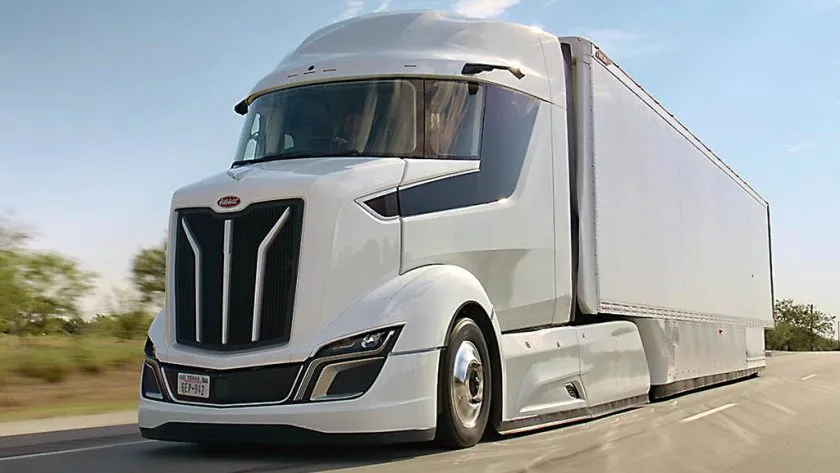
Semi-trucks (tractor units) hold a special place in organizing both intercity haulage and international freight transport. Tractors with a semi-trailer, also called road trains, carry the lion's share of cargo. Here, such road trains most often consist of American and European tractor units. Without a doubt, American trucks are far less popular, yet there are carriers on the market whose fleets are made up mostly of trucks from the USA.
Let's break down the main differences between American and European tractor units.
Semi-trucks from European manufacturers and those brought in from the USA undoubtedly differ from one another in a number of parameters.
Cab
The most obvious difference, the one that catches the eye first, is the shape of the cab. American models have a much more massive cab, since driver comfort is the top priority for US manufacturers. An American tractor unit has a cab with a protruding hood (bonnet), while European tractors more often come in cab-over-engine variants. Cruise control and air conditioning on "Americans" are already considered basic elements of such vehicles. You can comfortably live in the cab of an American tractor with minimal effort, since it is equipped with everything needed, like a small apartment. Not to mention that many "Americans" even have a shower cabin.
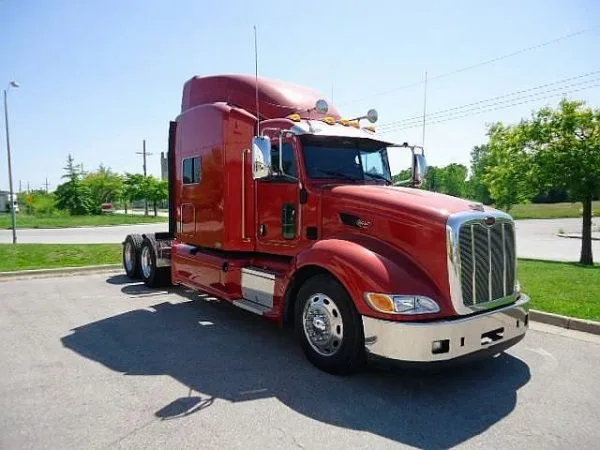
But European tractor cabs also have a lot to boast about in terms of content. Due to limited space, a "European's" cab follows a minimalist style, but still includes the most necessary comfort elements.
It's worth noting that the cab of an American tractor is mostly made of aluminum. Unlike steel European cabs, it is much lighter in weight. However, repairing it requires special argon welding. It should also be remembered that aluminum panels are attached to the frame rails with rivets. During repair, the old panel is completely cut out, and a new one is installed in its place using pneumatic equipment. To prevent the cab of an "American" from becoming skewed if a frame rail is damaged, that part must be fully replaced with a new one.
"Americans" have the simplest possible cab suspension. Air bags with a four-point mounting scheme are rarely used in the US. Rear mounts are usually made through a silent block or with springs and cushions. Front mounts are most often on silent blocks.
This mounting scheme, which implies the absence of shock absorbers, makes the cab of an American tractor significantly stiffer than that of "Europeans." However, in terms of comfort, both options are equally good.
Engine
The main engine manufacturers for tractor units in America are:
- Caterpillar;
- Detroit Diesel;
- Cummins.
Arguments about these engines in our country have not died down for several decades. Many consider Caterpillar engines to be very demanding on diesel fuel quality, while Detroit Diesel engines suit domestic diesel just fine. But there are opponents who hold a diametrically opposite view. However, everyone agrees that Cummins engines are the best of those existing on the American market.
However, it must be noted that mechanics highly value the reliability and maintainability of American engines. They most often have a well-thought-out design, implemented in technically simple mechanisms. American tractor engines usually exceed European diesels in displacement. This, without a doubt, affects their power and torque, prevents overheating during operation, and increases engine life. But this comes at the cost of higher fuel consumption.
Specialists note that the service life of American engines, with proper and timely maintenance, is much higher than that of European engines.
Transmission
Most American tractor units are equipped with gearboxes and axles from well-known manufacturers such as Rockwell and Eaton Fuller. With experienced and careful driving, there are no problems with them.
The clutch most often breaks due to the driver himself, or rather his inexperience. Its repair costs much less than on a European tractor. That's because the gearboxes of American tractors are not equipped with synchronizers. Because of this, the work is simpler and more efficient.
A special clutch brake significantly eases control. Its function is that once the long-haul driver reaches over 1,200–1,500 RPM, the gear shifts without additional actions. Errors are reduced to a minimum. However, because of this, if the tractor gets stuck in mud, it won't be able to rock itself free — it will simply burn out the clutch. For the whole system to work well, the condition of the axle seals must be monitored.
Features of American tractor units:
- 2 drive axles with differential lock capability;
- A very wide range of longitudinal adjustment for the fifth-wheel coupling mechanism.
It is precisely these qualities of American tractors that allow them to demonstrate higher traction performance and good stability on highways. This is also what allows them to haul heavy loads.
Suspension
Most often, American tractor units have one of 2 types of suspension:
- leaf spring;
- air suspension.
Under domestic operating conditions, air suspension proves more durable, since leaf springs break much more often on our roads.
The pneumatic system of European tractors is more complex than that of American ones.
American tractors have a stronger and more durable frame. Even in serious accidents, the load-bearing body elements remain intact. But still, one shouldn't rely on unshakeable reliability. There are cases of bent frame rails. However, we have not yet seen a single truck with tears and twists in the frame caused by poor roads or excessive load.
Repair and spare parts
Any truck eventually breaks down. Maintenance of European and American tractors is quite similar. Everything depends on how correctly the truck is operated.
Once again, we note that American tractors are much easier to repair and are structurally simpler.
Additional points
Carriers choose American tractors because they are rugged and straightforward. They are designed for regular heavy-duty work on low-quality roads. Such three-axle American trucks are very often found working in mountainous regions, where their power is the key to success. European tractors don't handle work in such harsh conditions equally well.
Drum brakes are most often installed on American tractors. Modern European tractors most often have disc brakes.
The onboard electrical system voltage of the machines also differs. American semi-trucks most often run on 12V, while their European counterparts most often use 24V.
Although American tractors are rugged, European tractors are still the ones you most often see on our roads. In the tirkomis catalog, you can always find a reliable semi-truck — of either European or American origin — to suit your tasks and budget.
Related articles

Semi-trailer tanker or fuel truck: what to choose
Comparing semi-trailer tankers and fuel trucks: capacity, ADR, inspection and prices. TIRkomis - free parking space and advertising for sale.

Truck 6×4: air suspension or leaf springs
Air suspension or leaf springs — which is better for a 6×4 tractor unit? We compare two Volvo FH from the TIRkomis lot and figure out which option suits heavy hauling, tipper work, construction sites, and challenging approach roads.

Mercedes-Benz Actros 1845: who is this tractor unit suitable for
Overview of Mercedes-Benz Actros 1845 Euro 5: OM471 engine, PowerShift 3, weak points, inspection, prices and secondhand sales through TIRkomis.